For more than a century, the North East powered the UK through coal, steel, and shipbuilding. Today, the same region is becoming one of the most important testing grounds for the UK’s energy transition, not through slogans, but through large-scale projects already under construction.
Off the coast, the Dogger Bank Wind Farm is being built in three phases and will become the largest offshore wind farm in the world once complete. Its output will be enough to supply around 6 million homes - more than the total number of households in Scotland and the North East combined. The turbines used on Dogger Bank are GE’s Haliade-X models, among the largest ever built. Each one is taller than London’s Gherkin skyscraper, and a single rotation of its blades generates enough electricity to power the average UK home for two days. The fact that one turn can replace 48 hours of household energy use shows how quickly offshore wind has scaled in size and impact.
On land, Teesside is developing the UK’s first full industrial carbon capture and storage network. At the centre of this is Net Zero Teesside, designed to capture up to ten million tonnes of CO₂ a year - equivalent to the annual energy use of up to 3 million UK homes. The captured CO₂ will be transported offshore by the Northern Endurance Partnership, a collaboration between major energy companies that is building the pipeline and storage system linking Teesside and the Humber to former gas reservoirs beneath the North Sea. Rather than shutting down heavy industry, the goal is to keep it running while stripping out emissions, making it one of the first attempts in Europe to decarbonise an entire industrial region instead of a single site.
Hydrogen production is growing alongside these plans. More than half of the UK’s industrial hydrogen already comes from Teesside, and new electrolysers powered by offshore wind are being planned to produce low-carbon “green” hydrogen. Earlier proposals to trial hydrogen in Redcar’s local heating networks were ultimately paused after public consultation, but they reflected the region’s willingness to test new clean-energy solutions. Manufacturers continue to advance hydrogen-ready vehicles, engines, and industrial equipment, supported by new infrastructure such as the hydrogen refuelling station approved at Teesside International Airport.
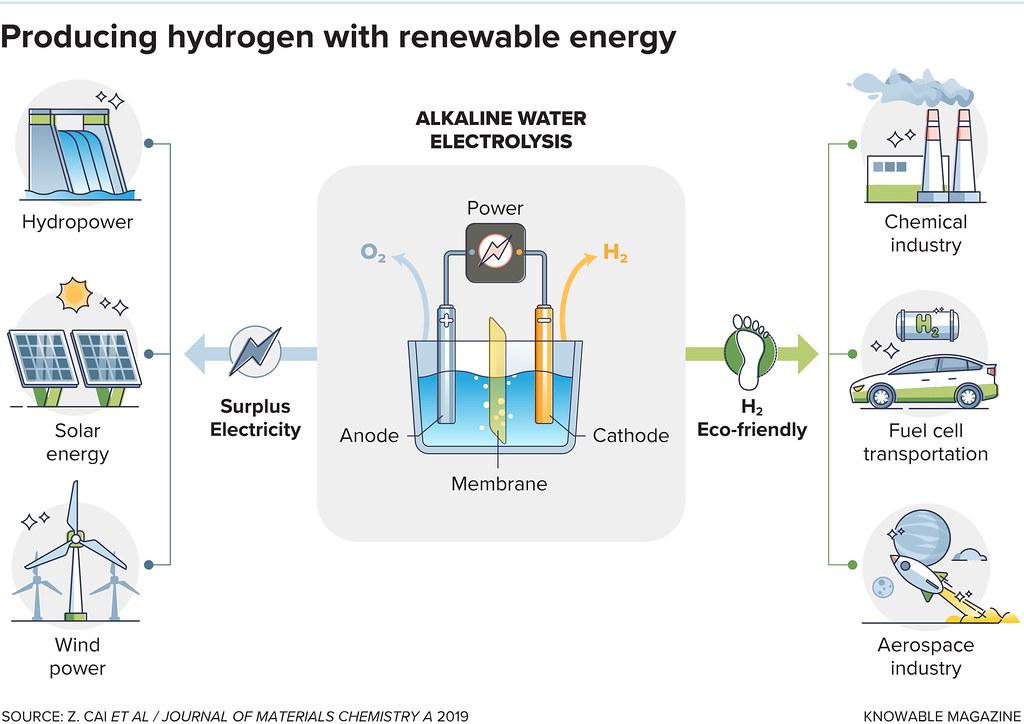
What makes the North East stand out is the way these technologies connect. Offshore wind is designed to power hydrogen production. Carbon capture is designed to support industries that can’t be electrified easily. Ports once used for coal now handle turbine blades twice the wingspan of the Angel of the North. Infrastructure built originally for fossil fuels is being rewired to store or transport CO₂ instead. The region is not discarding its industrial identity; it is adapting it.
This transition is supported by substantial investment. Billions of pounds from private and public sources are flowing into wind manufacturing, carbon storage networks, and hydrogen facilities. The result is one of the fastest-growing clean-energy supply chains in Europe, and a rising number of roles for engineers, geologists, policy analysts, technicians, and researchers. Durham, Newcastle, and Teesside universities are feeding skills and research directly into this system, creating an unusually close link between academic work and industrial deployment.
The North East is not presented as a finished success story; challenges remain, including planning timelines, grid capacity, and long-term policy certainty. But it already offers real-world evidence of something often discussed only in theory: a high-emission industrial region can transition without shutting itself down. Its energy identity is not being erased; it is being re-engineered.
If the rest of the UK wants to understand what a region-wide clean-energy shift looks like in practice, the place to watch is not London or Westminster, it is the stretch of coastline from Blyth to Redcar.
Sources:
https://www.netzeroteesside.co.uk/
https://www.netzeroteesside.co.uk/wp-content/uploads/2020/07/200707-NZT-FAQs-Final.pdf
https://from.ncl.ac.uk/research-the-north-east-leading-the-uk-transition-to-net-zero
https://www.northeast-ca.gov.uk/home-of-the-green-energy-revolution
Picture sources:
https://www.pexels.com/photo/yellow-excavator-2101137/
https://www.geograph.org.uk/photo/5658481
https://www.flickr.com/photos/knowablemag/52852881186