Can carbon capture and storage solve the carbon problem, or does it just provide an excuse for the continuation of fossil fuel use?
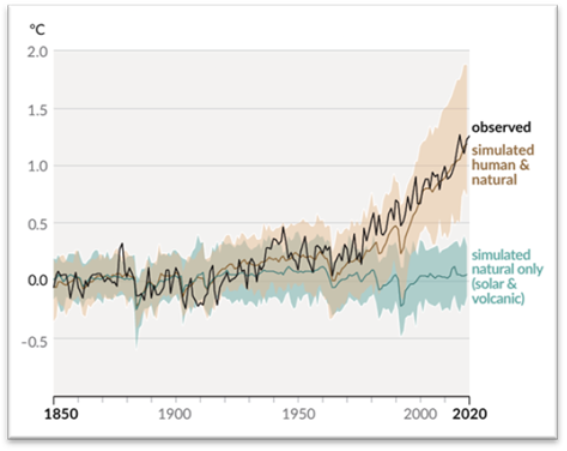
The phenomenon of climate change and its impacts on society are certainly not new - our understanding of the climate system and how natural and anthropogenic factors directly affect climate stability has been well understood for well over a century. The basic principles of global heating have been clear for around 200 years, with the French Mathematician, Jean Baptiste Fourier, in the 1820’s suggesting the atmosphere was insulating us, of which his work was expanded on by Claude Pouillet, who presented the idea that water vapour and carbon dioxide (CO2) were responsible for the greenhouse effect, ensuring a stable climate. Further research was published, such as Svante Arrhenius’ calculations on the burning of fossil fuels, primarily dominated by a staggering increase in the combustion of coal. However, it wasn’t until 1938 that British steam engineer Guy Callendar compiled global temperature data and was the first to show a direct correlation between CO2 and global warming, as illustrated in figures 1 and 2.
Beyond scientific calculations, contemporaries of the Industrial Revolution also provided projections for the potential environmental issues surrounding technology and transport growth. The French lawyer and scientist Eugène Huzar warned that a world “criss-crossed by railways and steamships, covered with factories and workshops” would emit vast quantities of carbon dioxide and carbonic acid, potentially disturbing the “harmony of the world”. His projection has proven to be incredibly prescient. Annual CO2 emissions have increased significantly from 1.96 billion tonnes in 1900 to around 39 billion tonnes in 2024, while global mean surface temperatures are now averaging at around 1.45°C above pre-industrial levels. Despite over a century of scientific understanding and observations of a changing climate, due to the enhanced greenhouse effect, fossil fuels currently account for approximately 82-87% of global primary energy consumption, indicating a significant reliance on fossil fuels such as oil and gas in the energy sector, which contributes 75% of global greenhouse gas emissions. It is within this context of persistent fossil fuel use, difficulties in transitioning to net-zero globally and conflict in geopolitics that carbon capture and storage (CCS) has gained prominence as an effective mitigation strategy, as well as supporting a low-carbon energy system transition. An integrated CCS system involves three phases: CO2 is primarily captured and compressed at industrial facilities and power plants, which is then transported via a pipeline infrastructure system to the injection site, where the CO2 will be stored; the third phase includes storage in a suitable geological formation, such as a saline aquifer, for isolation. CCS has the potential to store roughly 10,000 GtCO2 in geological storage, which would provide 250 years of underground storage if emissions were to plateau at 40 billion tonnes per year. Economic data further emphasises that if there is a lack of deployment in CCS technologies, the overall cost to achieve a 50% reduction in CO2 emissions by 2050 will increase by 70%.
However, CCS can only play a part in the tackle against CO2 emissions. As a mitigation strategy, it fails to directly address the main issue. Holistically, we are still reliant on fossil fuels which supply over 80% of all primary energy needs, for ensuring economic stability and have therefore been slow in transferring to renewable sources, such as wind, solar and hydropower, accounting for only one-seventh of the world’s primary energy in 2024. CCS is considered an expensive technology, remaining higher than USD50 per tonne of CO2. Therefore, it will only become optimal to use CCS when the unit costs of CCS are sufficiently low, and lower than a carbon tax, otherwise it will be more beneficial for the economy to emit CO2 and pay a carbon price, if we were to ignore the inclusion of renewable energy. Furthermore, a key challenge with CCS has been the perception that the technology prevents a transition away from fossil fuels and is acting instead as a form of greenwashing for fossil fuel companies, such as BP, ExxonMobil and Shell, to justify further exploration and drilling with a promise of a technological saviour within the near future. Analysis by Kazlou et al, 2024 highlights a risk with policy and modelling mismatch regarding the scale of CCS deployment, in that many integrated assessment models assume much faster CCS scale-up than the paper finds feasible, creating the danger that policymakers or industry could use these optimistic CCS assumptions to justify weaker near-term emissions reductions and delay decarbonisation of the energy sector. Despite the issue of potentially justifying further fossil-fuel exploration, Kazlou further argues that even if current project plans are doubled by 2030, CCS is likely to remain well below the levels assumed in most 1.5°C compatible pathways, perpetuating the view that CCS is very unlikely to provide a solution to the climate phenomenon by itself due to its underperformance.
Developing Dilemma:
Large economies such as the UK, the US, Germany, and Japan industrialised through heavy reliance on fossil fuels, particularly coal, generating severe environmental damage, including smog, acid rain, and land and water degradation. Having developed through carbon-intensive growth, these economies have since shifted toward higher value-added, less energy-intensive sectors, enabling them to reduce energy intensity and transition their power systems toward low-carbon sources. For example, the UK now generates over half of its electricity from low-carbon technologies. However, to reach this point, developed economies have already utilised a disproportionate share of the remaining global carbon budget. Consequently, LICs face a compressed development window in which they must industrialise under stricter carbon constraints than those historically faced by advanced economies. This creates a climate justice dilemma rooted in the principle of Common But Differentiated Responsibilities.
Examples of these carbon constraints are limitations such as emerging trade mechanisms, such as carbon standards, environmental reporting requirements, and carbon intensity thresholds, which can raise compliance costs for low-income countries (LICs), limiting market access. Climate risk is also increasingly reflected in sovereign borrowing costs, further raising financing constraints for vulnerable economies, which will require significant sums of cash to afford the high expense of renewable energy sources. By contrast, fossil fuels remain relatively cheap, reliable, and scalable, suggesting that restrictions imposed through global policy, finance, and trade frameworks may constrain the speed of industrialisation in LICs.
This is where the potential of carbon capture and storage (CCS) could reveal a developmentally compatible strategy for LICs, as it may allow them to continue using domestic fossil fuel resources while reducing associated emissions. Often, fossil fuels are plentiful within their own economies, providing reliable, low-cost energy that can support industrialisation and employment creation. Furthermore, they will benefit from cheaper power, which will both help households in terms of cost of living and cut firms’ costs of production, improving household welfare and enhancing firm competitiveness. Thus, this acceleration in growth may allow firms to grow and, over time, it may facilitate gradual structural change at a natural pace, which will also shift their economies into producing greater value-added goods and services, which may be more sustainable in the long term. By allowing these economies to develop similarly to our own, with the caveat that they can utilise the potential of CCS to mitigate their greenhouse gas production in the short and into the long term, as they begin their own green energy transition when it becomes more economically viable, once income levels and technological capacity improve. This may lead to economic, social and environmental progress without suffering the negative environmental and social impacts that greenhouse gases may cause.
The bottom line of the issue is that many LICs are being pushed into an energy transformation too early in their development, leading to a mismatch between their immediate need for affordable, reliable energy to support industrialisation and poverty reduction, and the external pressures to rapidly decarbonise in line with global climate objectives set by already-industrialised economies. Firstly, an issue contributing to this is that CCS is currently very capital-intensive, as previously mentioned, and the scale of production has not yet reached a level where the unit costs are sufficiently cheap to be affordable enough to mitigate greenhouse gas production when used in tandem with normal fossil fuel production. While CCS may permit continued fossil fuel use in the short term, large-scale investment in fossil-based infrastructure risks locking LICs into carbon-intensive development pathways, potentially creating stranded assets if global climate policy does not recognise CCS and it continues to tighten. This problem is also exacerbated by the cost of borrowing being more expensive due to the higher risks associated with LIC’s. This is a problem which would be helped by greater access to climate finance, which is an issue because green finance taxonomies often exclude CCS tied to fossil fuels. This is because climate funds will prioritise renewables over fossil fuel plus CCS methods, and as a result, access is limited. Another significant contributor to the failure is that decarbonisation objectives often conflict with immediate development needs. In many of these countries, poverty reduction, job creation and energy access may be prioritised, creating a sequencing dilemma outweighing environmental concern.
The development dilemma, therefore, centres on sequencing: whether CCS can act as a transitional bridge that reconciles development and decarbonisation, or whether it is required at all, as LIC’s can benefit by leapfrogging fossil fuels entirely by utilising continuously improving sustainable energy technology, which is decreasing in price. It also carries the risk of entrenching fossil dependence in economies that have the most to lose from future climate instability.
Why has large-scale CCS often failed?
Despite the potential environmental benefits that could be yielded from increased deployment of CCS globally, the carbon mitigation method remains socially, economically and politically contested. Public opposition has been seen to disrupt the installation of CCS in many countries, including Germany and the Netherlands, due to “long-term risks” associated with storing CO2 on the wider populations, such as the risk of leakages. Public opposition in Germany in during the period 2009-2012, led to CCS being dropped from their government policy agenda, highlighting the strong impact of the public on governmental decisions. However, in 2024, Germany released key principles for a ‘Carbon Management Strategy’, as part of the ‘industry package’, which included the use of CCS as they believed they would not “be able to achieve our climate targets” otherwise, through offshore storage.
Furthermore, it has been found that proposed large-scale CCS projects have been twice as likely to fail than to reach operational status. One of the most prominent issues associated with CCS is cost – projects are complex and expensive, especially during operation and a lower efficiency of the plant due to a significant amount of energy being utilised for capturing CO2. Transportation of CO2 to storage facilities also includes fees as well as general maintenance. The German research consortium CDRmare estimates a price of 150 to 250 euros per tonne of CO2 for injection in the North Sea as a result of combined steps. This raises the question as to the extent to which CCS can be considered an economically sustainable method of reducing CO2 levels. In comparison, competition with other methods such as the instalment of renewables on a global scale has resulted in renewables being favoured over CCS due dramatic declines in price, for example, for every doubling in cumulative global deployment of solar panels, their cost falls by around 28%. This is the same for wind turbines with a reduction of about 15%. Solar panels now cost less than a ten-thousandth of their (inflation-adjusted) cost half a century ago, making renewables more economically attractive in many contexts. Furthermore, the lower technical and commercial complexities of renewables, has led to far more successful project outcomes as well as greater uptake of government support schemes. In contrast, CCS fails to benefit from similar economies of scale due to projects being highly site-specific, along with multiple stages of operation, and overall, are a far more complex infrastructure system.

Sources:
https://www.ipcc.ch/site/assets/uploads/2018/03/srccs_wholereport-1.pdf
Fossil fuels - Our World in Data
our-changing-planet.pdf / Huzar E. L’Arbre de la science. Paris: Dentu; 1857.
Temperature change relative to the pre-industrial period, World
4 Charts Explain Greenhouse Gas Emissions by Sector | World Resources Institute
*Strategy for promoting low-carbon technology transfer to developing countries The case of CCS
Renewable Energy - Our World in Data
*The economics of CCS_ Why have CCS technologies not had an international breakthrough?
The Politics of Large-scale CCS Deployment - ScienceDirect
Cabinet clears path for CCS in Germany | BMWE
International Energy Agency, 2016. 20 years of Carbon Capture and Storage. Accelerating Future Deployment. Paris (France).
Nemet G.F., 2019