Fossil fuels have been the primary resource for our energy production ever since the Industrial Revolution around 200 years ago. Whilst they have provided an easy and efficient method to produce energy, their drawbacks have been apparent from the start, with black smog covering cities and life expectancy rates dropping globally. Looking at the modern world today, our energy demand has skyrocketed into numbers incomprehensible a hundred years ago. Scaling our fossil fuels to match this has led to irreparable damage to our world and humankind.
So now we’re left with one huge question: when will society stop using fossil fuels and turn exclusively to renewable and sustainable alternatives? I will unpack this by considering three key scenarios for the phasing out of fossil fuels in our electricity grid: renewable energy replacing through economic benefits, global cooperation around the world, and then simply running out of fossil fuel supply in the world. Let’s look at each of these:
Scenario 1: Renewable Energy Replaces Fossil Fuels
The first way we may rid ourselves of fossil fuels is via renewable energy becoming the cost-effective option on a global scale. Whilst this may come as a shock to most readers (including myself), renewable energy has already become a much cheaper source of electrical power worldwide!
According to Imperial University, the levelised cost of electricity (LCOE) in 2023 of wind/solar power was around £45/MWh. Conversely, the cost of gas-fired generation is £124/MWh, which is a substantial cost disadvantage! Even sources such as offshore wind have been developing into more economic solutions than fossil fuels. Whilst the LCOE in 2015 was at £150/MWh, this has since plummeted to £94/MWh in 2023. These stats show clearly that renewables are cheaper energy solutions and thus are becoming favoured.
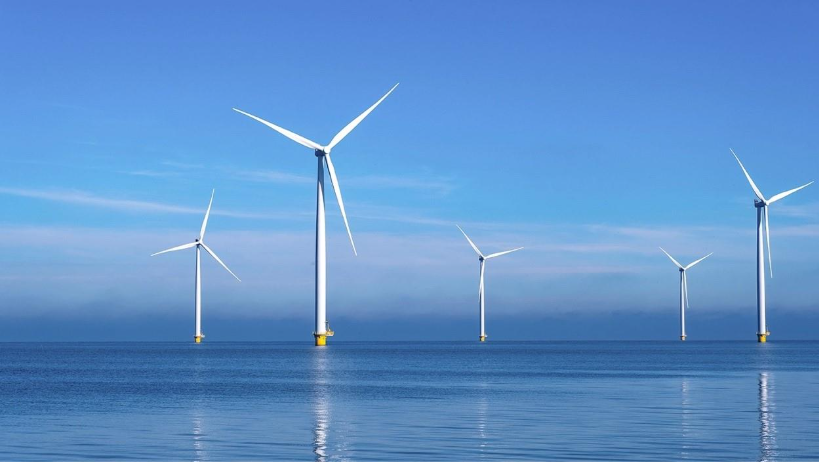
Renewable energy is becoming cheaper than fossil-fuel energy because it eliminates expenses related to sourcing fuel for production. Oil and natural gas are becoming more difficult to extract from the earth since easily accessible supplies have been exhausted and are also costly to import from foreign countries. At the same time, renewable energy relies purely on the natural sources of sunlight, tidal power and wind, which are freely accessible worldwide. This difference has become more drastic over the past 10 years or so, leading to a large economic gap between the two energy sources.
Despite this obvious price advantage, companies boasting their usage of green energy continue to use large portions of fossil fuels in their production. Companies generally struggle to invest solely in one source of revenue, as this skyrockets the risk of company collapse if something compromises this source.
This is unfortunately very prevalent in renewable energy. Both short term (such as weather conditions from day to day) and long term (such as political pressures on the renewable sector) factors combine to make renewable energy a “risky” sector to invest in. In addition, renewable energy struggles to yield results quickly after its construction. Consequently, many companies will invest in fossil fuels to improve their economic capabilities to then invest in renewable energy production.
To summarise, whilst renewable energy is objectively a much more economical option and may inspire a gradual shift away from renewables, companies capable of making change on a large scale are suffocated by the risks of investing solely in this source of energy. Renewables are unlikely to be our giant-killer… so what other options do we have?
Scenario 2: Global Cooperation to Phase out Fossil Fuels
A second strategy to remove fossil fuels is to reach a worldwide agreement to forcibly stop their usage. Recently, there has been political surge to discourage the usage of fossil fuel, as its impacts on climate change are becoming impossible to ignore. A recent spike in natural disasters is the most apparent statistic of them all:
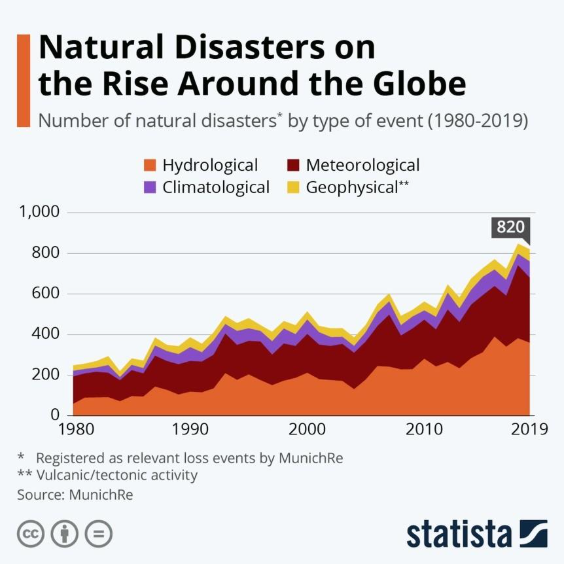
As greenhouse gases continue to warm up the earth, more water vapour is evaporated into the atmosphere. Powerful storms utilise this vapour as a fuel, so an excess leads to the production of stronger storms. This is the scientific explanation for how the burning of fossil fuels has indirectly led to a spike in natural disasters around the world.
Losses of life from natural disasters have sparked outrage and developed public interest towards limiting the greenhouse gases we produce. This translates to pressure on politicians to make this change in our energy sources. One recent and local example of a shift in politics is the victory of the Green Party in the byelection of Gorton and Denton, a constituency near Manchester. Whilst only a small change, this demonstrates the public’s frustration with fossil fuels and fear of natural disasters translating directly into political movements.
Looking more broadly, though, leaders around the world struggle to come to agreements on how to limit the usage of fossil fuels. As the presidency of Donald Trump continues to plague the USA, the influence of such a powerful country shifting away from renewable energy again has led to a hindrance in political progress for the phase-out of fossil fuels. For example, the International Energy Agency (IEA) has been pressured by the Trump administration to resume a “current policies scenario”, where countries are now able to abandon their pledges for energy source change with no political repercussions.
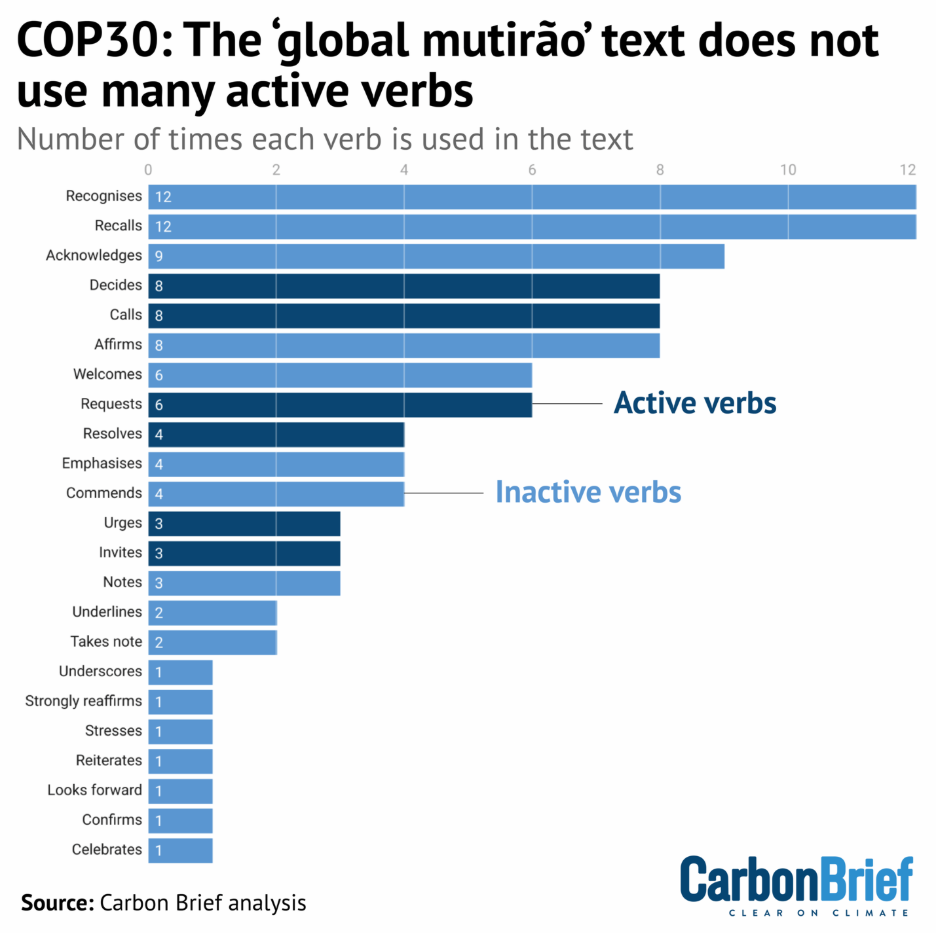
Another example of contention in global cooperation is the disaster of COP30, the global leader’s conference for critical pledges and agreements on how to transition the world into renewable energy and to limit the effects of climate change. Despite growing pressure from scientists to make rapid change (predicting now that global warming will reach up to 2.5˚C), only 80 of 194 attending countries wanted action for the phase-out of fossil fuels. The result was a “roadmap” - essentially an informal overview of a plan with no action required - that was excluded from the official COP text. On top of this, the non-attendance of the USA at the conference meant that very little global advancement was feasible in the absence of one of the world’s economic superpowers. All this combined demonstrates the lack of global unity on this issue, and how the negative influence of the USA is detrimental to progress eliminating fossil fuels.
One underlying difficulty that I can understand is that oil and natural gas are very key resources for several developing countries. Governments feel may paralysed to decide; phase-out fossil fuel use or prioritise other areas of short term social and economic development. This clash leads to very little progress for the time being, but this may be able to change over the coming years.
Scenario 3: Physical Limitations of Fossil Fuels – “Running Out”
With our other two plans falling through, we finally have our giant killer: fossil fuels can’t be used anymore if we end up using all of them! This is a huge silver lining for everyone rooting for renewable energy. We’ll be forced to turn to renewable energy in the next century as we will eventually be left with no other choice. The main caveat is that we must ensure the world, after all our fossil fuel usage, is still inhabitable. Would this tip the scale too far, and progress global warming too fast to ever be stopped? Would natural disasters drive humanity into the ground? Let’s look at these ideas to determine whether this final method is truly viable for us.
Here are the stats you’ll all love to hear: according to Infinity Renewables, oil will run out in 47-56 years, natural gas follows in 50 years or so, and coal dies out last 70-100 years from now. Whilst it’s great to know that it’s finite, the problem is that we just don’t have that kind of time. Statistics from the World Meteorological Organisation report that 37.4 billion tonnes of CO2 were released in 2024 from fossil fuel emissions alone. This colossal scale of emissions continuing for 40-50 years would leave a dent that our world is unfortunately unable to recover from.
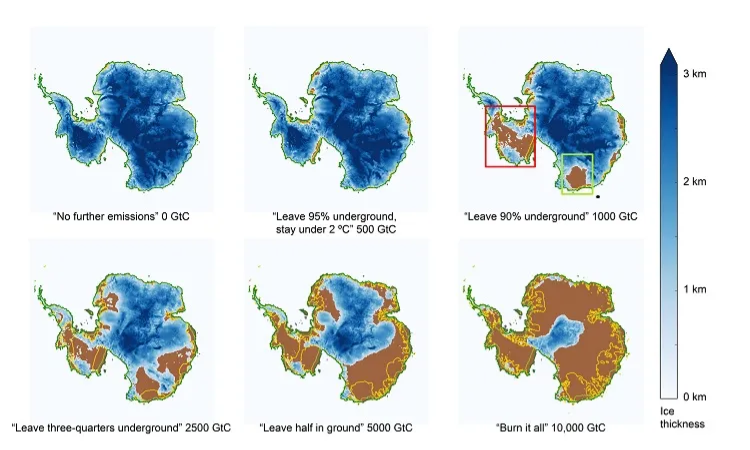
Studies released by Science Advances reported that the effect of burning the entire supply of fossil fuels would increase the global temperature beyond sufficient temperatures to melt all the ice in Antarctica. This would cause the global sea levels to rise by roughly 200 feet - enough to cover most major cities in the world. This is obviously the worst-case scenario, but it shows us that there is absolutely no possibility that this would save us. Even if we do turn to renewable energy after this, are we left with a world worth saving?
Okay, so I know it looks bad. None of these options are clear-cut methods for us to be free of fossil fuels. With no further resistance to fossil fuel burning, we may wind up in a scenario that looks very similar to these diagrams above. So how do we REALLY get rid of fossil fuels? My proposal is a combination of the three methods I’ve explained. Global cooperation to limit fossil fuels, governments finally turning to renewables for cheaper prices, and a lack of easily accessible supplies of fossil fuels may be sufficient to finally rid ourselves of them.
Having plagued our world for 200 years, fossil fuels could finally be dealt with. This may leave us with a damaged world, but also a world capable of healing.
Sources:
Irena (July 2025) 91% of New Renewable Projects Now Cheaper Than Fossil Fuels Alternatives, Retrieved from Irena:
Grantham Institute (2024) How cost-effective is a renewables-dominated electricity system in comparison to one based on fossil fuels?, Retrieved from Imperial: https://www.imperial.ac.uk/grantham/publications/background-briefings/how-cost-effective-is-a-renewables-dominated-electricity-system-in-comparison-to-one-based-on-fossil-fuels/
Infinity Renewables Group (September 2025) When Will Fossil Fuels Run Out?, Retrieved from Infinity Renewables Group: https://infinity-renewables.com/when-will-fossil-fuels-run-out/
Walker Hanlon (October 2015) Pollution and Mortality in the 19th Century: https://www.nber.org/system/files/working_papers/w21647/w21647.pdf
USGS (April 2025) How can climate change affect natural disasters?, Retrieved from USGS: https://www.usgs.gov/faqs/how-can-climate-change-affect-natural-disasters#:~:text=With%20increasing%20global%20surface%20temperatures,more%20powerful%20storms%20to%20develop
Rokke (December 2025) COP30 Delivered Roadmaps Not Resolutions. Here’s Why It Still Matters, Retrieved from Forbes: https://www.forbes.com/sites/nilsrokke/2025/12/01/cop30-delivered-roadmaps-not-resolutions-heres-why-it-still-matters/
Kienzler et. al (February 2023) How oil and gas companies can be successful in renewable power, Retrieved from McKinsey & Company: https://www.mckinsey.com/industries/electric-power-and-natural-gas/our-insights/how-oil-and-gas-companies-can-be-successful-in-renewable-power
Evans and Woo Nam (November 2025) IEA: Fossil-fuel use will peak before 2030 – unless ‘stated policies’ are abandoned, Retrieved from CarbonBrief: https://www.carbonbrief.org/iea-fossil-fuel-use-will-peak-before-2030-unless-stated-policies-are-abandoned/
Griggs (September 2015) What Would Happen If We Burned All The Fossil Fuels On Earth?, Retrieved from Popular Science: https://www.popsci.com/burning-all-fossil-fuels-could-raise-sea-levels-by-200-feet/#:~:text=A%20new%20study%20published%20today,major%20cities%20in%20the%20world
WMO (November 2024) Record carbon emissions highlight urgency of Global Greenhouse Gas Watch, Retrieved from World Meteorological Organisation: https://wmo.int/media/news/record-carbon-emissions-highlight-urgency-of-global-greenhouse-gas-watch#:~:text=The%20long%20lifetime%20of%20carbon,one%20of%20WMO's%20flagship%20initiatives
Image Sources:
https://www.renewableuk.com/our-work/offshore-wind/